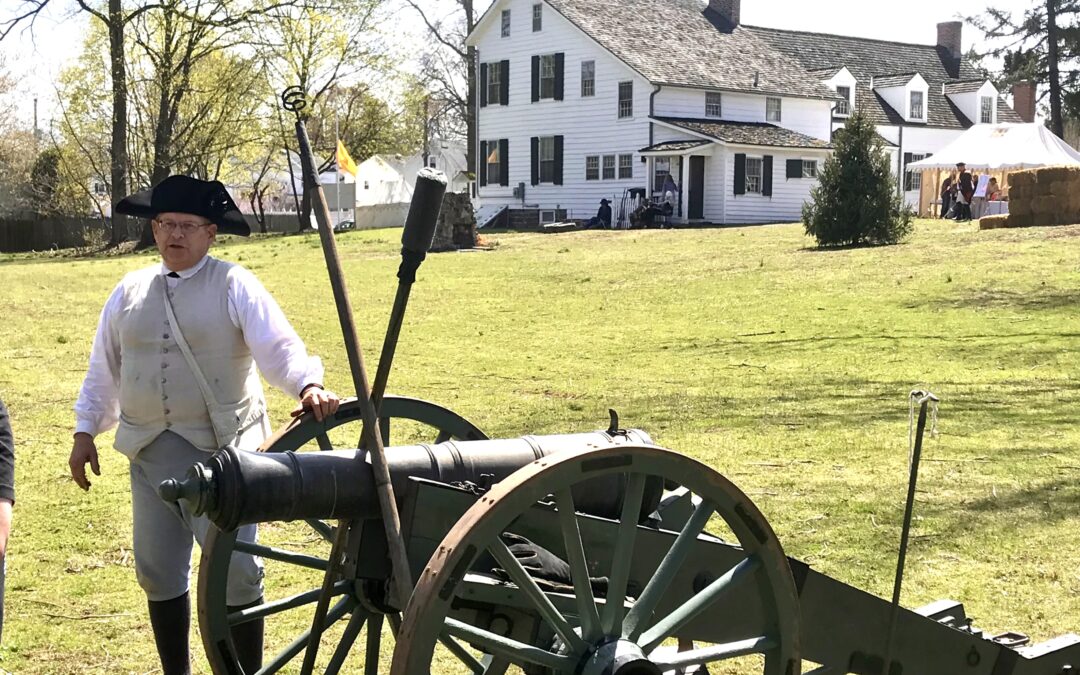
As New Jersey begins to celebrate the 250th anniversary of the nation, a coalition of historical organizations in Somerset County is hosting its fourth and final Middlebrook Symposium on March 14, 2026, to deepen public understanding of the encampments known as “Middlebrook” that happened in and near the Watchung Hills. The symposium will be held at Raritan Valley Community College from 9 AM to 3:30 PM.
This year’s symposium will focus on the “legacy” of the Middlebrook encampments, which includes the establishment of the first military academy of the United States, the predecessor of West Point 24 years later.
“Before West Point, there was the Academy at Middlebrook,” said event co-director Linda Barth, who is executive director of the League of Historical Societies of New Jersey. “It was here, in Somerset County, where the American Army built a permanent barracks with classrooms to teach officers the science of war, particularly how to build and deploy cannon and other artillery.”
Among the speakers at the conference will be Dr. John Seidel, an emeritus director of Washington College and a leading expert on Pluckemin Artillery Camp in Bedminster, near the Jacobus Vanderveer house, headquarters of General Henry Knox, artillery commander of the Continental Army.
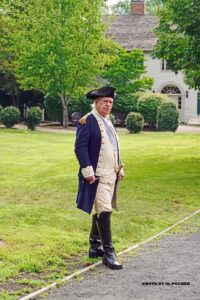
George Washington (aka David Emerson) will talk about his time at Middlebrook.
In addition, several living history reenactors will bring to life important figures at Middlebrook, including David Emerson as General George Washington and Leslie Bramlett as Hannah Till, an enslaved cook who served Washington and the Marquis de Lafayette, bought her own freedom, and became a prominent member of Philadelphia’s free African American community.
Additional speakers include Roger Williams, the historian of the New Jersey Society of the Sons of the American Revolution who will speak about the forage war, in which American and British soldiers fought over food and other supplies, and Dr. Robert Selig, who will speak about the movement of troops through the area as they marched to Yorktown, VA, to win the American Revolution in 1781.
“The encampments at Valley Forge and Morristown may be more famous, but Middlebrook was just as important—in some ways, more so,” said Linda Barth.
The Middlebrook spring encampment occurred in 1777. During the winter of 1778-1779, 10,000 Continental troops spread out among the present-day municipalities of Bridgewater, Bound Brook, Manville, and Bedminster in what is known as a “cantonment” because of its duration and the durability of the huts they constructed.
This year’s symposium is the final in a series of four. Tickets may be purchased to attend in person or virtually, from anywhere in the world. Tickets for in-person or virtual attendance must be purchased in advance at https://heritagetrail.org. In-person registration, which includes lunch, is $35 for adults, $28 for veterans, and $20 for students (ID required). Early in-person registration is encouraged because space is limited. Books by presenters will be available on site for purchase and signing. The virtual livestream tickets cost $20 on the Afton platform and can be viewed for 30 days. Proceedings volumes of the previous three symposia are available at Amazon.com in paperback or digital versions (Search on The Heritage Trail Association under Amazon books).
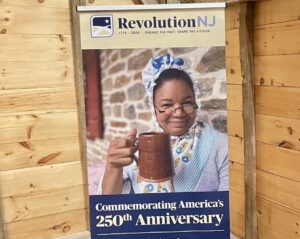
Leslee Bramlett will speak as Hannah Till.
Funded in part with support from the Somerset County Cultural and Heritage Commission, a partner of the New Jersey Historical Commission and the New Jersey Society, Sons of the American Revolution, this series was developed and organized under the leadership of several local historical organizations including the Heritage Trail Association, Friends of Abraham Staats House, Wallace House State Historic Site and the Wallace House and Old Dutch Parsonage Association, Somerset County Historical Society, the Jacobus Vanderveer House, and the Washington Camp Ground Association. Raritan Valley Community College provided technical and logistical support. The Friends of Bridgewater History also provided support.